

A Coffee Brand's Packaging Upgrade: Craft Decisions from Plain Carton to Premium Gift Box
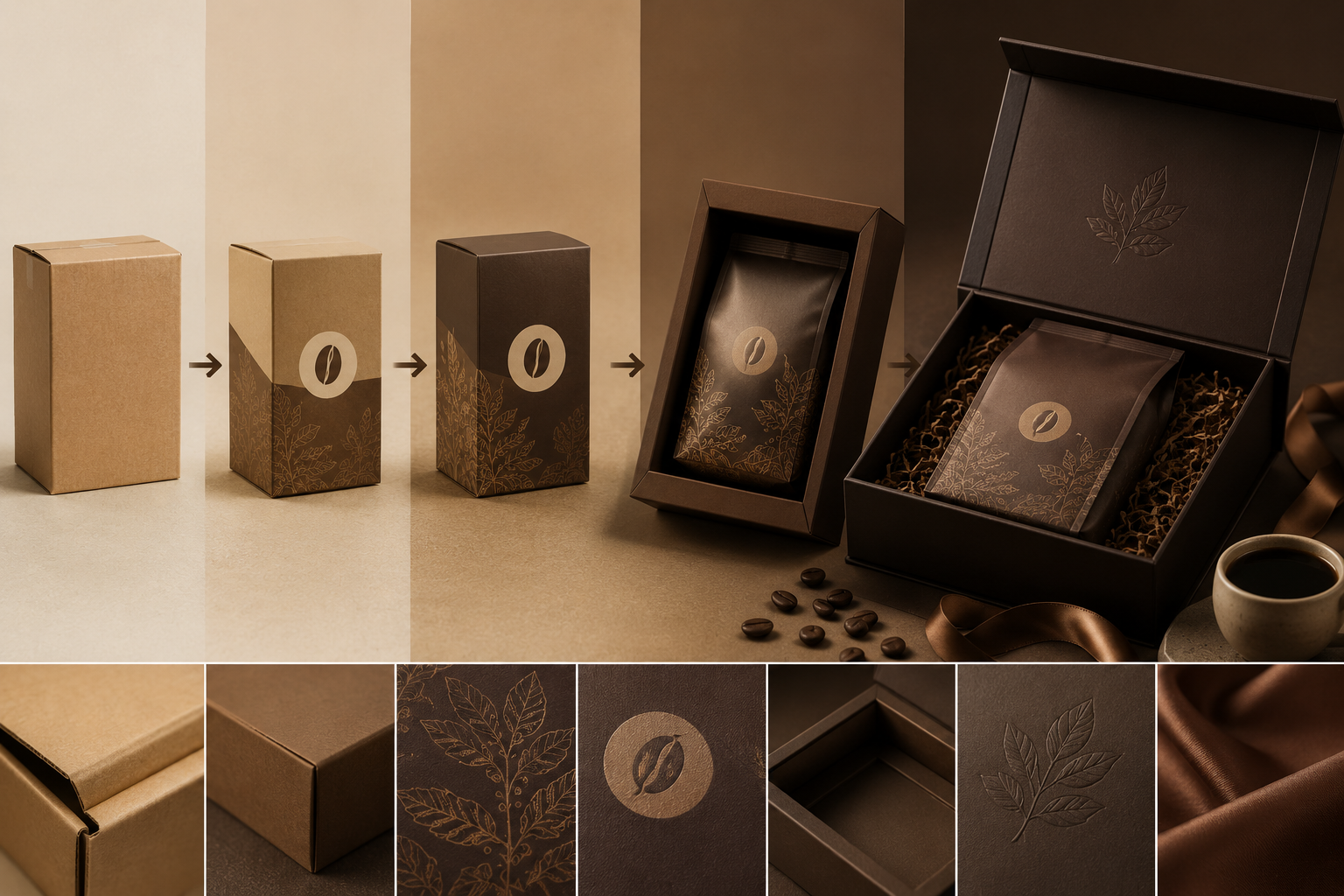
A brand's turning point sometimes comes not from advertising, but from a box.
The following illustrates a typical scenario for a Taiwanese specialty coffee brand — representing the kind of decision-making logic and craft details common to brands in this space. The story begins with a single question: why do consumers say they love the coffee, yet never share it?
The answer the founder eventually found wasn't in the coffee itself. It was in the packaging.
The Brand Problem: Great Product, No Story to Tell
This type of brand is built around native Taiwanese coffee beans, with cupping scores in the industry's upper-mid tier and a solid product reputation. Yet online word-of-mouth traffic remained steady but flat — no explosive growth.
The founder conducted an informal survey: asking ten loyal customers to send a photo of the last time they opened a coffee package. Of ten customers, only two had photos worth sharing. The other eight showed unremarkable kraft paper bags or plain white boxes — no tactile quality, no sense of occasion, no reason to pick up a camera.
The coffee wasn't the problem. The packaging wasn't doing its job.
First Decision: Choosing the Right Paper Stock
The founder arrived at the print shop with three requirements:
- The packaging must create an "unboxing ritual" — the act of opening it should feel like receiving something worthwhile
- It must match the tone of specialty coffee — no cheap-looking compromises
- Cost must remain manageable at production scale
Why Paper Stock Is the First Decision Point
In packaging print production, the substrate determines the possibilities and constraints for every subsequent process. A common mistake is finalizing the design first, then choosing the paper — only to discover that the intended visual cannot be achieved on the selected material.
The correct sequence: experience goal → paper selection → design adaptation → post-press decision.
Three Finalist Paper Stocks
| Option | Material | Weight | Characteristics |
|---|---|---|---|
|
Option A |
Metallic paper |
250g |
Strong luxury feel, ideal for premium gift boxes, excellent color rendering |
|
Option B |
Soft-touch specialty paper (suede feel) |
270g |
Distinctive tactile quality, cloth-like texture, non-reflective |
|
Option C |
Imported textured specialty paper |
300g |
Natural grain, strong artisan character, highest cost |
After proofing, the founder and core team conducted a blind tactile test. Option B (soft-touch specialty paper) won by an overwhelming margin — everyone said "yes, this is it" the moment they touched it.
Why Tactility Determines Perceived Value
In our experience, and consistent with industry observation: in high-end consumer product purchase decisions, tactile experience frequently surpasses visual cues — particularly in gift contexts. A box that feels heavier in the hand, even with identical contents, tends to receive higher quality ratings from consumers.
Second Decision: Combining Post-Press Processes
Once the paper stock was decided, the brand moved into post-press selection. The combination of post-press treatments directly affects:
-
Final visual output
-
Production timeline (lead time)
-
Per-unit cost
-
Quality consistency at scale
Matte Lamination as Base Protection
The soft-touch paper already has its own texture, but uncoated paper is vulnerable to humidity and abrasion. The printing company recommended applying matte lamination after the base print — protecting the piece while reinforcing the tactile quality, without disturbing the existing texture.
Gold Foil Stamping vs. Silver Foil Stamping vs. Spot UV
The brand's stylistic positioning was "warmth, craft, and Taiwanese identity," which led to the following evaluation:
-
Gold foil stamping: Warm but potentially too opulent, risking association with seasonal gift box clichés
-
Silver foil stamping: Modern feel but not fully aligned with brand tone
-
Spot UV (selective gloss): Applying gloss exclusively to the brand logo and coffee bean illustration, while keeping everything else matte — creating understated depth and contrast
Final decision: Deep khaki matte base + selective gold foil stamping (brand wordmark) + spot UV (illustration elements). This combination can be completed within a single production workflow, adding approximately two working days to lead time while keeping costs within an acceptable range.
Die-Cutting and Gluing: Precision Requirements
The unboxing experience of a gift box depends heavily on die-cutting accuracy. If die-cut deviation exceeds 0.5mm, the lid-to-base fit will have noticeable gaps or resistance — immediately destroying the "ritual" effect.
One key advantage of an integrated end-to-end printing facility is that die-cutting tool fabrication, die-cutting, and gluing are managed under one roof — eliminating the precision inconsistencies that arise from multi-vendor outsourcing.
The Final Gate Before Production: Physical Proofing
Many brand owners skip physical proofing and proceed directly to full production orders — one of the most common and most expensive mistakes in print procurement.
This brand committed to two rounds of proofing:
-
Round 1 (Digital proof): Confirming layout, text placement, and color direction. Low cost, maximum revision flexibility.
-
Round 2 (Physical sample): A full finished-piece reproduction using the final paper stock, final post-press treatments, and actual die-cutting tools. The brand owner and designer physically hold the box, open the lid, and evaluate the complete experience.
Round 2 revealed three problems:
- The gold foil logo created excessive reflection at certain light angles — foil coverage area was reduced
- The magnetic closure on the lid was insufficient — magnet specifications required adjustment
- The coffee bag fixation method inside didn't fit the box's interior dimensions — the inner box measurements needed to be recalculated
Had these issues been discovered after full production, correction costs would have been tens of times greater than the proofing investment.
Brand Outcomes After Launch
Based on our experience serving coffee brand clients, packaging upgrades have generally led to the following observable changes: increased social media unboxing activity, gift box products becoming a meaningful new revenue contributor, higher average order values driven by premium packaging options, and a positive trend in repeat purchase rates. The degree of these changes varies by brand visibility, channel structure, and marketing support — specific figures differ across cases.
This wasn't driven by advertising. It was driven by the packaging itself. When consumers feel the box is worth sharing, the brand's word-of-mouth reach cost drops dramatically.
Frequently Asked Questions
Q1: What is the typical minimum order quantity for packaging upgrades? Is it accessible to small brands?
Q2: My packaging design was created with AI assistance. Can it be sent to print directly?
Q3: I only need a small number of sample boxes for market testing. Is that possible?
Conclusion
This kind of packaging upgrade isn't a cosmetic redesign — it's a complete brand strategy execution. From paper stock selection to post-press combinations, from proofing confirmation to production quality control, every decision is grounded in clear, deliberate logic.
Packaging is the first physical point of contact between a brand and its consumer. When that contact is done right, consumers don't just buy coffee — they purchase an experience worth sharing.
📩 Contact Yeehaa Color Printing. Based in New Taipei City, serving clients nationwide across Taiwan.
Related Information
The Complete FSC–Certified Printing Guide: From Paper Source to Finished Product – Yeehaa Color Printing Breaks Down 3 Common Enterprise Procurement Misconceptions
Navigate 2026 anti-greenwashing laws. Yeehaa Printing clarifies 3 FSC procurement myths, CoC finishing audits, and 4 steps to secure audit-ready ESG records.
 中文
中文